

Catherine Chidgey’s new novel, The Starving Bride comes out today. It’s dark, dystopian, full of sly humor as well as the most gloriously gothic tableaux. And there’s a lion.
The novel tells the story of Hazel Whitlock who, owing to various difficulties- the pitch-black outrageousness of this plot is only fully realised when you discover what happened to Hazel when she was younger- signs up to be The Starving Bride, a sideshow spectacle in the seaside resort of Blackpool. The gig is straightforward in one sense: Hazel must lie in a perspex casket as strangers pay to watch her waste away. But simple’s not the same as easy- Hazel has to lie in her casket for 40 days, otherwise she doesn’t get paid. And there’s also the matter of Xander, the lion in there with her, all jaws and paws, lapping at his bloody ice-lollies to keep cool in the sweltering heat of England in the near future. As the days count down, both Hazel and Xander start to change in all kinds of unexpected ways, as the punters become more and more obsessed by what they’re queuing up to see.
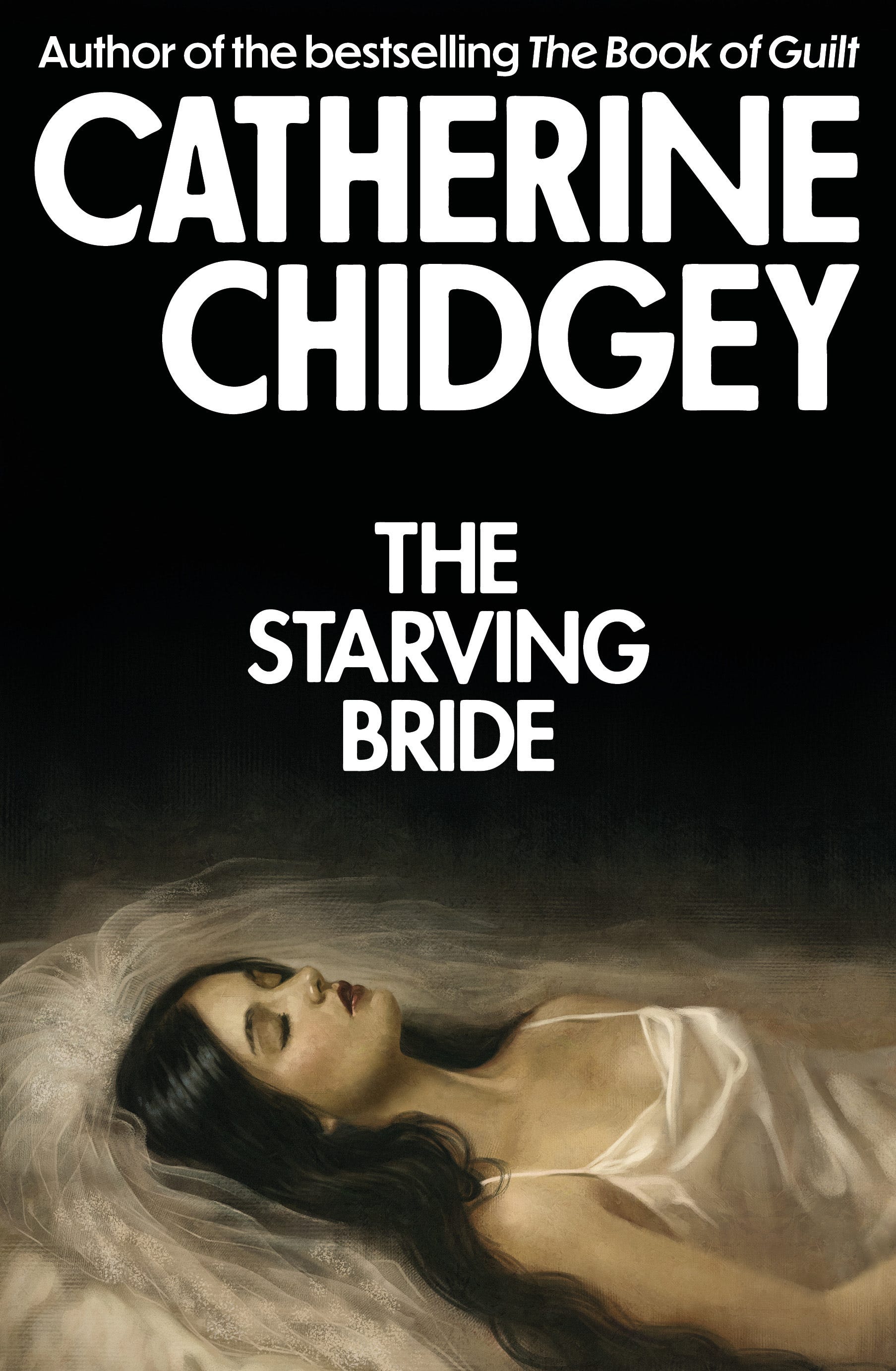
Another absolute banger of a cover by Todd Atticus, featuring Wellington Poet and Vampire Dream Girl Joy Holley, maybe.
I spoke to Catherine Chidgey about all the various depressing ways in which societies across time have been partial to watching a female body waste away. We talked about how this story was inspired by an awful observation made by her daughter, about how nostalgia is a slippery force to be reckoned with, about guilt and complicity as themes that show up regularly in her work and about the enduring erotic allure of the 1980’s man-lion (IYKYK)
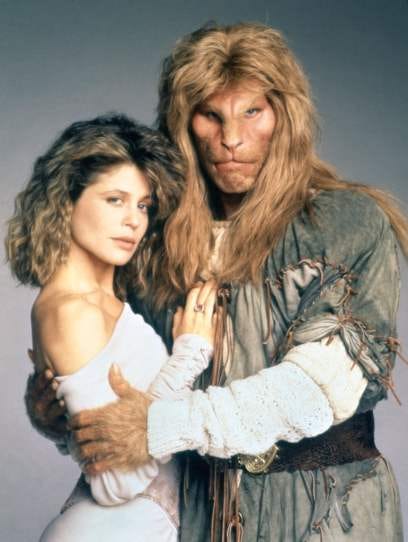
Vincent and Catherine, from Beauty and the Beast. Was anyone else obsessed? (NB Vincent is not Xander, Xander is a real lion.)
In this excerpt from the podcast (edited for clarity, and to spare readers the full force of some of my longer preambles. I promise my questions will get shorter as we progress ), Chidgey spoke with her usual astute fluency about Ozempic, America’s Next Top Model and how we can’t get enough of prone ladies in caskets.
NMC : The starving bride. This is real! This is a real gig?
Catherine Chidgey: It really happened, and it was huge in Blackpool in the 1930s. The starving bride appeared in a glass casket along the Golden Mile. She was quite scandalous. But she was making a lot of money, and the sideshow folk absolutely wanted to keep the show going. The story was that she was just an everyday girl plucked from the streets and she wanted to raise money to set her and her groom up for their married life. And the monetary reward was substantial; it was enough to buy a small house at the time.
NMC: And the monetary reward is substantial in your story as well – Hazel stands to gain if she loses, doesn’t she?
CC: She stands to gain 40,000 pounds if she sees out the full 40 days. In this Blackpool of the near future, the council have decided that they will reintroduce this sideshow and all the other dodgy old cancelled acts because the town is on a decline. So they create this #A Simpler Time campaign, and it does feel when you arrive in this version of Blackpool as if you are stepping back into the past and into the good old days, which may not have been that good.
NMC: I thought about Sleeping Beauty, I thought about Snow White reading this, those quite brutal fairy tales, which at a certain point centre around the image of a prone woman in a casket who needs to be awakened by a man, or who’s eaten a poisoned apple. And If you go on into the Victorian era, they loved a prone, beautiful woman lying down, didn’t they?
CC: Absolutely, we cannot get enough of it. I even thought of America’s Next Top Model, which makes a cameo in the book, where the young women in that show were required to lie in the open grave for their photo shoot, for instance.
I did devour that show when it was still airing because it was kind of awful and fascinating and beautiful, in equal measure. But we can’t get enough of ogling the female form in particular, the stripped back female form, the emaciated female form, and it feels like that’s kicking into high gear now with the dawn of weight loss drugs – Ozempic and the like. When I started writing the book, I don’t think I would have known the word Ozempic, but as I was writing it, it seemed to be placed more and more centre stage on social media.
NMC: Hazel’s weight fluctuates. She’s a fascinating woman, and she goes into this willingly for complicated reasons. She has a complex backstory, and she wants to escape or reset or obliterate her past and remake herself.
CC: And there’s this weird kind of tightrope walk between attention and the desire for attention and the desire for privacy. The starving bride basically is a body on show, but also a very confined body, and I really loved playing with that tension in the book. The notion that yes, she is displaying herself, but she’s also lying there in this confined space where she basically has no agency, and she cannot move, and she cannot open her eyes, and she cannot talk to the public. She’s just there to be watched and to be judged.
NMC: This story is so different from other stories you’ve told, but there are themes, aren’t there? Chidgey-ian themes! The one that came through, is that tension between assuming responsibility or culpability and rejecting it, because we are complicit, the lookers, the watchers who are rolling up to these sideshows, we’re always a part of it?
CC: Oh, absolutely! You know, I’m putting her on show, but just as much I’m putting the members of the public – and us within that group – on show as well, because they expose themselves. They say terrible things when they’re watching her, either about her body or they reveal aspects of their own lives and are shown to be pretty dreadful. Really, I’m fascinated by the capacity of human beings to be awful and to treat fellow human beings terribly, and to engage in a kind of a willful ignorance, which is something that I have explored in my earlier books, particularly in Remote Sympathy and The Wish Child, my two books set in World War II Germany, in that capacity to kind of look away from suffering and to set ourselves apart from it, and to know that it’s going on, but to feel completely removed from it and and not bear any responsibility for what is unfolding on our doorsteps.
NMC: For a book that’s so funny, this book made me very sad as well, partly because it’s not new. This is such an old story – the story of a woman publicly shrinking. I’m Gen-X. I came up in the 80s and 90s and these were the magazines we read…
CC: Absolutely, that’s my era too, and it was awful then. It was terrible, but it feels so much worse now. I have an 11-year-old daughter who, somehow – not at our house – is being exposed to hundreds of messages every day that tell her you are not okay the way you are: there is something wrong with your body, you do not look how you should look.
I’ve asked Alice [my daughter] if she’s okay with me talking about this in interviews, and she is, and so is Alan, my husband, her dad. One of the drivers for writing this book in the first place was that she came to me when she was six – I thought it was eight when I was remembering it, but I looked back at my diary, and she was six when she came to me – and said, “Mum, my thighs are fat.”
You know, it’s heartbreaking. Where is she getting that from? Not from me.
NMC: The horror is compounded now by social media, by the way that these ideas can be networked. We didn’t have that. We didn’t have Facebook groups. There’s a group in this story called the Annabelles. What do they do?
CC: So I was aware of the pro-ana movement, pro anorexia groups that proliferate online, and and it’s basically the way that I presented in the book, which is groups of young women who club together online to encourage one another to lose weight, to compete with one another to lose weight to an extreme level, and it’s not too hard to find that kind of dialogue online. You don’t have to look very hard to find it. You don’t have to look very hard on Instagram to find influencers who are severely malnourished, dangerously anorexic, who have hundreds of thousands of followers. That’s terrifying.
So in the book, the Annabelles hear about Hazel’s act and begin to idolise her, and want some kind of contact with her. And one of their members happens to live in Blackpool and happens to be the daughter of Frank, the city councillor in the story, even though Frank has no idea what is going on with his own child. He and his wife kind of brush it off the way that parents do by saying, “Oh, you know, all teenage girls go through a dieting phase”, or “She’s just had a growth spurt”, so “She’s taller”, or you know, “She’ll grow out of it”. I think we do that, we do tend to brush off impending catastrophes under our own roof in a way that can be really dangerous.
NMC: I had a lot of empathy for Frank because he’s outclassed in so many ways, and he is bewildered by what’s happening with Grace, and afraid, afraid to say anything, to intervene in any way. You know, it really captures the powerlessness that can come with living with a loved one who has an eating disorder.
CC: Yeah, I mean, his wife tells him in no uncertain terms we’re not to comment on her body, we’re not to say anything about her body because that could be harmful. But so is saying nothing, you know? So is pretending it’s not happening.
NMC: And all of this is playing out in Hazel’s story in a way that she’s not prepared for. She didn’t sign up for this. She doesn’t understand this aspect of the surveillance that’s happening.
CC: She goes into it with the fantasy of getting a large cash payout at the end, but also becoming an influencer, which is what so many young women aspire to. I kind of want to shake them and say that is not a healthy career choice. She thinks, oh, I might land a big contract with Weight Watchers or with a tooth- whitening toothpaste or with high-end jewellery, and then I’ll be sitting pretty, and I won’t have to work very hard to make an awful lot of money. And I guess that that kind of life must seem so appealing.
It kind of sickens me when I see the proliferation of young female influencers online, just selling themselves, selling nonsense, hungry. They have a kind of a bottomless appetite for attention, and it’s so empty, it’s so meaningless. You know, it’s something that I played with as well, kind of in a different way in The Axe Man’s Carnival, just the poison that is social media, that desire for that kind of attention.
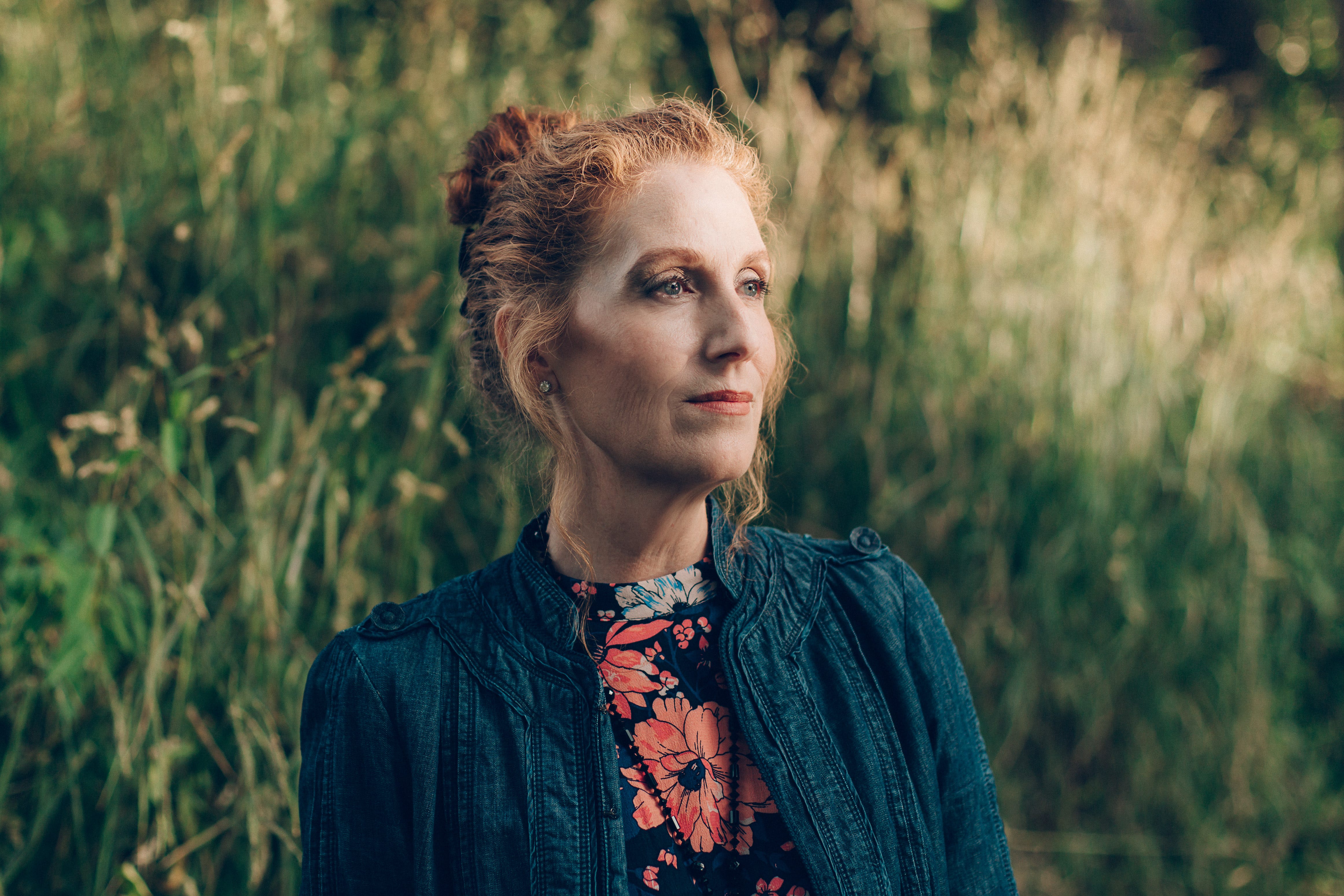
The Starving Bride is out now in New Zealand and Australia, it’ll be published next year in the UK. Thank you to Catherine Chidgey for being our first guest on Tell It Slant.


